





07766836261




What Are the Effects of Finger Sucking on the Teeth and Mouth?
Finger sucking is a natural and comforting habit for many children — but when it continues for several years, especially with strong sucking pressure, it can begin to affect the teeth, jaw and mouth. Understanding what’s normal, what may cause problems, and how to help your child stop can make the journey much easier for everyone.
Effects of finger sucking on the mouth
Finger sucking begins as a soothing reflex, often starting before birth. For many children, it fades naturally between ages 2 and 4. However, persistent or vigorous sucking can place repeated pressure on the teeth, jawbone and roof of the mouth.
This may lead to:
- Anterior Open bite — when the top and bottom teeth don’t meet when the mouth is closed
- Overjet – The upper front teeth may stick out.
- Crossbite – where the upper jaw can narrow
- Changes to the position of the teeth and the development of the bite – In some cases, this may also affect how a child produces certain speech sounds
Not all children who suck their fingers develop these issues. Passive sucking (simply resting the fingers in the mouth) is far less likely to cause changes. Some changes to the bite may self-correct once the habit stops, particularly while a child’s mouth and teeth are still developing. The British Orthodontic Society (BOS) states if the habit continues beyond the age of 7, then the position of the adult teeth can be permanently affected and self-correction is less likely to occur. However, this isn’t guaranteed, and persistent changes should be assessed by a dentist.
Seeking Help
Regular dental check‑ups from age 1 are recommended for all children. If you notice:
- Front teeth beginning to tilt forward
- A bite that doesn’t seem to meet properly
- Speech changes such as a developing lisp
- Ongoing, vigorous finger sucking
…it’s worth speaking to a dentist or orthodontist. They can assess whether the habit is affecting your child’s mouth and offer guidance on next steps.
When should I help them to stop?
A orthodontist or dentist may suggest:
- Monitoring the habit for a little longer
- Introducing gentle strategies to help your child stop
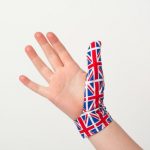
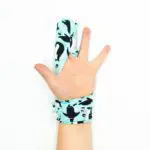
- Using supportive tools such as a fabric finger guard
Every child is different, and the right approach depends on their age, temperament and reasons for sucking.
Why Do Children Suck Their Fingers?
Finger sucking is a soothing, instinctive behaviour that begins in the womb. Babies often continue the habit because it helps them relax and fall asleep. For toddlers, it can become a coping mechanism during moments of stress, tiredness or overwhelm.
Thumb and finger sucking habit?
Help your child take positive steps towards stopping thumb and finger sucking with a comfortable, fabric thumb or finger guard Buy NowTips to Help Your Child Stop Finger Sucking
Children are far more successful when they want to stop, so encouragement works better than pressure. Here are supportive strategies that can help:
Identify triggers
Finger sucking often appears when a child is:
- Tired
- Bored
- Anxious
- Hungry
- Seeking comfort
Understanding why they suck can help you redirect the behaviour — for example, offering a cuddle, a snack, or a hands‑on activity like drawing or building.
Use positive reinforcement
Praise small wins. Sticker charts, reward jars or simple verbal encouragement can make a big difference.
Talk to your child
Older children often respond well to gentle explanations or pictures showing how finger sucking can affect their teeth.
Ask your dentist for support
A dentist’s reassurance can be powerful — many children take advice more seriously when it comes from a professional.
Recommended by Dentists worldwide
“I love the Thumbsie® – it works every time I recommend it! The Thumbsie® provides a fun way for a dentist or parent to help the child stop sucking because after all, it’s a hard habit to kick." Dr. Kotecha of Glen Dental Buy NowTry a finger guard
If you concerned about the effect of finger sucking is having on your child’s mouth then try a fabric finger glove. Soft, comfortable finger guards act as a gentle reminder not to suck. Thumbsie® finger guards are made from fabric, available in five sizes, and come in fun, child‑friendly designs and are suitable for ages 3-14. They fit either hand and over either of the middle two fingers, so either the middle and the ring or the middle and the index fingers. They can be worn during the day, at night, or whenever your child is most likely to suck.
Conclusion
Finger sucking is a normal, comforting habit for many children, and in most cases it resolves on its own. However, if it continues past age 4 or involves strong sucking pressure, it can begin to affect the teeth, jaw and mouth.
With gentle encouragement, positive reinforcement and supportive tools like a Thumbsie® finger guard, children can be helped to develop new habits and work towards stopping finger sucking.
share this page





Award Winning Thumbsie®
For the second consecutive year, Thumbsie® was named Best Children's Oral Habit-Breaking Product at the GHP Global Excellence Awards, winning in both 2025 and 2026. We were also delighted to receive a Silver Award at the Junior Design Awards 2025

Problems with thumb and finger Sucking
You may be concerned if it is harmful, at what age should they stop or what could be the long-term effects if they don’t stop.



how thumbsie helps families
Multi-award-winning Thumbsie® was created by Jo Bates, founder of Thumbsie Ltd, when her third daughter, Isabel, needed help to stop thumb sucking.
Connect with us